1857 Iron County Militia Project
In fall 1857 in southern Utah upwards of 100 men in the Iron County Militia (including planners, couriers and militiamen on the ground) were involved in the disastrous Mountain Meadows Massacre.
- Who were the members of the 450-man militia?
- Who were those involved in the massacre?
This site is designed to facilitate exchanging information about the 1857 Iron County Militia and its members, to answer questions as accurately as the historical record will allow and to increase understanding.

In 1857, there were approximately 450 men in the Iron County militia. At the outbreak of the Utah War of 1857-58, rumors of invasion by the United States Army set the militia in motion. Militiamen were organizing, drilling, patrolling, scouting and carrying expresses. Infamously, upwards of one hundred men were involved in some fashion in the Mountain Meadows Massacre. Who were the members of the 450-man militia? Who were those involved in the massacre?
This site explores the events in southern Utah at the outset of the Utah War. The Iron County militia was the Tenth Regiment of the territorial militia and was also known as the Iron Military District. It was the local militia unit in southern Utah. Here is a Basic Account of the massacre.
As word of the approach of the United States expeditionary army reached Utah, it touched off fears of invasion and dispossession. This was due to the experiences of many Mormons in the Midwest. Because of conflicts with the original settlers in these locales they were driven from their homes and lands, first in western Missouri, then in western Illinois. These fears of being driven from their homes was particularly strong in southern Utah because of its isolation and perceived exposure.

The misunderstanding over the intentions of the approaching army touched off the conflict known as the Utah War. By August 1857, the southern Utah militia had been reorganized and was on heightened alert. They undertook what seemed vital at the time: harvesting grain, caching foodstuffs, guarding the approaches to southern Utah, sending scouting parties in search of the approaching army and surveilling passing emigrant trains.
As this crisis broke, disaster befell the first passing train, the Fancher-Baker party, at Mountain Meadows. This site discusses the unfolding crisis and ensuing massacre. It also provides biographical sketches of the involved militiamen. Our desire is to provide the most accurate information possible. We solicit feedback and corrections from our visitors. We will update the site with corrected information. We appreciate your comments and feedback. Thank you for visiting!
Send comments or corrections to editor@1857ironcountymilitia.com.
What Did the Militiamen Say about the Massacre?


For a Basic Account of the massacre see here. It is largely based on the confessions of fourteen militiamen who admitted being present at the massacre. The List of the Accused identifies more than sixty men and the sources connecting them to the massacre. Some identifications are certain, others are probable, still others are problematic.
The fourteen militiamen who admitted being present at or involved in the massacre are discussed in the article entitled, The Self Confessed. It identifies and provides background on these fourteen militiamen. For individual articles on these fourteen militiamen including biographical sketches and a brief summary of their statements about the massacre, see Samuel Knight (above left), Nephi Johnson (center left), Ellott Willden (below left), Joseph Clews, William Edwards, John M. Higbee, Philip Klingensmith, John D. Lee, Daniel Macfarlane, Samuel McMurdie, James Pearce, Samuel Pollock, Joel White, and William Young.
Can we possibly rely on any of their statements? Here, as every detective, judge, criminologist and historian knows, the key is confessions combined with corroboration. The brief article, A Method for Sifting Militia Accounts, introduces some of the main issues in distinguishing confessions and incidental detail from a variety of more questionable or blame-shifting statements -- evasions, denials and accusations against others.
"Every Man His Own Historian," Carl Becker famously declared in 1931 to the American Historical Association. And certainly, on this continually controversial topic, it is necessary that every man and women be his or her own historian. Each one must weigh the controversies to get at the truth. The article, Historiography of the Massacre, briefly sketches some of the major treatments of the massacre in the past century and a half. But with the historical treatments at such variance with one another, you must be prepared to be your own historian -- to sift the evidence and draw your own conclusions.
Eyewitnesses and Sources to the Mountain Meadows Massacre identifies the witnesses who offered written statements concerning the massacre or important particulars before or after it.
Who Were the Other Militiamen at the Massacre?
Who were the principal religious and military leaders in southern Utah involved in planning the events from the First Attack to the Final Massacre? The key five planners/leaders were Colonel William H. Dame, Major Isaac C. Haight, Major John M. Higbee, Major John D. Lee and Private (Bishop) Philip Klingensmith.
-
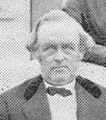
William H. Dame -

Isaac C. Haight -
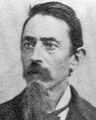
John M. Higbee -
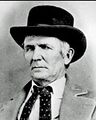
John D. Lee -
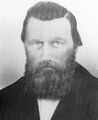
Philip Klingensmith


In the years following the massacre, many of the militiamen who were drawn into the disaster came to blame these five for initiating the First Attack and/or the Final Massacre. Click on each name for their background.
Who were the other militiamen who participated, or at least were on the ground, at the time of the final massacre? Click on each of the following names for the background on the other militiamen involved in the massacre. For some of these men, their presence at Mountain Meadows at the time of the massacre is confirmed from multiple sources. Remember, however, that for others, only one source identifies them as participants. Thus, the reliability of these latter identifications is subject to some doubt. Bearing that caveat in mind, the other militiamen who have been identified as participants are George Washington Adair, Samuel Adair, Ira Allen, Andrew A. Allen, Benjamin A. Arthur, William Bateman, Thomas H. Cartwright, John W. Clark, Prime T. Coleman, Ezra H. Curtis, William R. Davies, Jabez Durfee/Durfey, Eleazer Edwards, Columbus R. Freeman, Oscar Hamblin, Richard Harrison, Ira Hatch, William S. Hawley, Charles Hopkins, John S. Humphries, George Hunter, Alexander G. Ingram, John Jacobs, Swen Jacobs, Samuel Jewkes/Jukes, Dudley Leavitt, Alexander H. Loveridge, John M. Macfarlane, James M. Mangum, John Mangum, Sims L. Matheny, James N. Mathews, Jabez Nowlin, Harrison Pearce, John Price, William S. Riggs, Don Carlos (Carl) Shirts, William R. Slade, William Slade, Joseph H. Smith, George Spencer, William C. Stewart, Anthony J. Stratton, William Tait, Amos G. Thornton, David W. Tullis, Oscar Tyler, John Urie, John Weston/Western, Robert Wiley, John Willden and James Williamson.
A Word About Tone

Occurring at the outset of the Utah War of 1857-1858, the Mountain Meadows Massacre was an appalling war-time atrocity. Regardless of whether we categorize it as war crime, religiously-motivated revenge, or mass killing arising from war hysteria and moral panic, it is, from any vantage point, a horrific and unjustified slaughter.
The fact that the wagon train was lured to its doom by deceptive promises of protection emphasizes the enormity of the crime while the fact that the large majority of the victims were women and children only increases our sense of outrage. Even the militiamen themselves came to see it as a catastrophe and some saw in hindsight how cowardly their cynical deception had been.
Yet at this site, as we portray the militiamen responsible for the massacre, every effort will be made to present their lives before and after the massacre in a neutral and dispassionate manner. After a century and a half the massacre is now history. Although many books, articles and websites still present the massacre with impassioned outrage, that passion frequently clouds judgment and detracts from the basic task of understanding the complexity of its origins and causes. Although we share with others a sense of its horrific enormity, the tone we strive for here is a dispassionate impartiality. Through this quiet, dispassionate approach we will be able to better comprehend how this frightful disaster occurred.
We leave it to you, the reader, to reach your own considered judgments about the origins, causes, and conditions of the massacre and on how to judge the men involved in this calamitous disaster. The task of reaching provisional or final judgments is yours.
What's New at Our Website
The Mountain Meadows Massacre Site Is Now a National Historic Landmark

In September 2011, a ceremony at Mountain Meadows marked the official recognition of the Mountain Meadows Massacre site as a National Historic Landmark. The events of the weekend of September 10-11 commemorated this significant change in status amid the unveiling of a new memorial at the Northern Gravesite. We will add coverage and photographs of this event but we also maintain the Facebook page for the Friends of the Mountain Meadows Association here: https://www.facebook.com/FriendsofMtMeadowsAssoc
The most important recent change to our site has been wiki software upgrades to improve its appearance, features and functionality. Internal and external links are now easier and more reliable while thumbnail photographs are now enlarged with a click. The new wiki software has allowed us to make a series of improvements to the form and content of our site. We have also revised every militia biography with expanded treatment and sources and a new Bibliography. We'll continue to expand and improve the biographies for the militiamen as we receive input from you or locate new sources of information.
We also updated the news items on the Front Page. Also, some visitors have suggested that we include information on such figures as George A. Smith, Jacob Hamblin, etc. Great suggestion! We will add that over time.
What's Planned
Our hope is to continually locate additional photographs of the militiamen and historical photos or woodcuts depicting other details relevant to our subject matter. It's an ongoing process. If you have any, we would be interested in hearing from you.

To add information about the background of an important group of militiamen, coming soon is an article on the British ironworkers, their activities on the Cedar City ironworks and how the repeated failures at the ironworks may have contributed to the overall sense of frustration and failure in Cedar City. It treats both the British immigrants drawn into the massacre and those who, for whatever reason, were not.
Here are some other plans for the site:
- We have photographs of the dedications and programs at Mountain Meadows from 1999, 2007, 2009 and 2011. They help convey some of the "reconciliation" efforts among various communities and peoples. Progress is always slow, but in the last dozen years significant progress has been made.
- Since 2007, officials of the Mormon Church have made important statements, acknowledgements and expressions of regret. Some know of these statements, but many still are unaware. Another idea is to add a news section summarizing these statements and events.
Let Us Hear From You
We hope you enjoy the site and find it profitable. Some of you may have historical photographs, family histories, genealogical information or just interesting family lore about some of the subjects of our site. Please leave a comment or contact me via email at editor@1857ironcountymilitia.com. We're interested in seeing what you have, exchanging information, and comparing notes!
Best regards to all,
Robert Briggs
